The Food Safety and Standards Authority of India (FSSAI) has introduced a landmark reform through the Food Safety and Standards (Licensing and Registration of Food Businesses) Amendment Regulations, 2026, notified in March 2026. These changes are designed to simplify compliance, reduce operational burdens, and strengthen food safety governance across India.
Effective from 1st April 2026, these reforms significantly impact all Food Business Operators (FBOs)—from small street vendors to large-scale manufacturers.
Key Highlights of the 2026 Amendment
1. Perpetual Validity of Licenses & Registrations
One of the most impactful changes is the introduction of perpetual validity.
- No more renewal requirements for FSSAI licenses or registrations
- Licenses remain valid unless suspended, cancelled, or surrendered
- Businesses can pay fees for multiple years in advance
Impact:
This reduces administrative workload, eliminates renewal risks, and lowers long-term compliance costs.
2. Revised Turnover Thresholds for FBO Categorization
FSSAI has redefined turnover limits for classification:
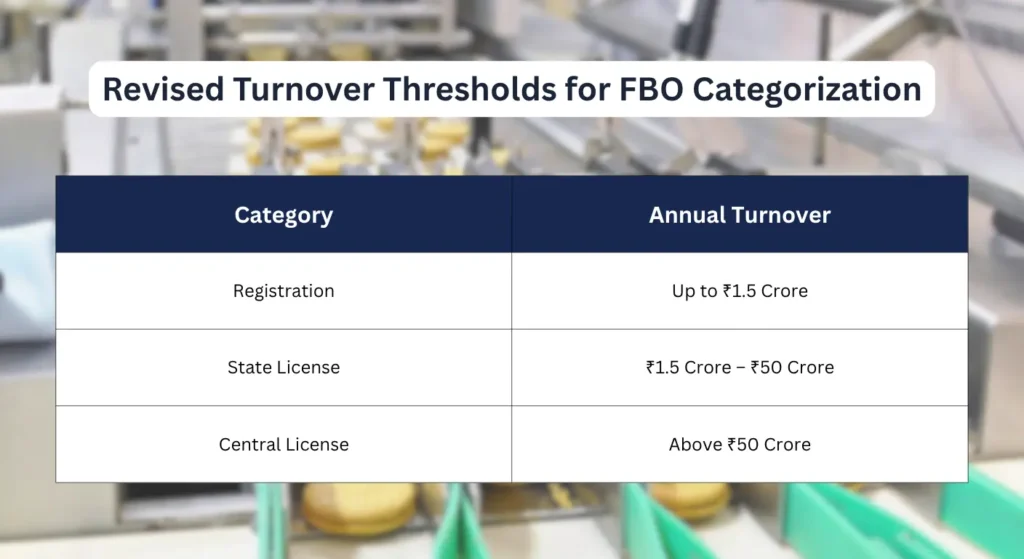
What this means:
- Many businesses may shift categories
- Migration will be automatic via FoSCoS
- No additional fee for migration due to revised thresholds
3. Deemed Registration for Street Food Vendors
Street vendors registered under the Street Vendors Act, 2014 will now receive automatic (deemed) FSSAI registration.
Benefits:
- No dual registration or duplicate fees
- Easier onboarding into the formal food safety ecosystem
However, vendors must still comply with hygiene and sanitary requirements under Schedule 4.
4. Risk-Based Inspection Framework
FSSAI is moving towards a technology-driven, risk-based inspection system.
This system evaluates:
- Compliance history
- Inspection records
- Third-party audit results
- Testing and surveillance data
Outcome:
- Compliant businesses face fewer inspections
- Non-compliant businesses are targeted more effectively
5. Seamless Migration & No License Number Change
For businesses transitioning between categories:
- License number remains unchanged
- Migration is automatic
- No need for fresh approvals from authorities
6. Continued Focus on High-Risk Food Categories
Despite relaxed thresholds, FSSAI ensures strict control over high-risk sectors such as:
- Dairy products
- Meat processing
- Packaged drinking water
- Infant food
- Fisheries
Key point:
Safety, hygiene, and testing requirements remain unchanged and stringent.
7. Increased Role of State Authorities
With revised thresholds:
- Over 98% of food businesses will now fall under State Government jurisdiction
- States will play a larger role in inspection, monitoring, and enforcement
What This Means for Food Businesses
Opportunities
- Reduced compliance burden
- Lower administrative costs
- Improved ease of doing business
- Faster regulatory processes
Responsibilities
- Continuous compliance with hygiene and safety standards
- Strong documentation and audit readiness
- Adaptation to digital and risk-based monitoring systems
Strategic Takeaway for FBOs
These reforms mark a shift from renewal-based compliance to performance-based compliance.
Businesses that:
- Maintain strong food safety systems
- Invest in internal audits and testing
- Ensure regulatory alignment
…will benefit from reduced inspections and smoother operations.

Conclusion
The FSSAI Amendment Regulations 2026 are a progressive step toward simplification, transparency, and smarter regulation. While compliance becomes easier administratively, the focus on food safety integrity remains stronger than ever.
Food businesses that proactively align with these changes will gain a competitive advantage in both compliance and market trust.