What ISO 9001, ISO 14001, and ISO 45001 Changes Mean for Businesses
Introduction
ISO management system standards are entering a new phase. Between 2026 and 2027, major revisions to ISO 9001 (Quality), ISO 14001 (Environment), and ISO 45001 (Occupational Health and Safety) are expected. Unlike previous updates that focused largely on structural alignment, these revisions place a strong emphasis on climate change, sustainability, ethics, leadership behavior, and risk-based thinking.
For organizations operating in FMCG, food, packaging, manufacturing, pharmaceuticals, and global supply chains, these changes are not cosmetic. They signal a shift toward embedding sustainability and ethical responsibility into core management systems, rather than treating them as separate ESG initiatives.
This article explains what is changing, why it matters, expected timelines, and how organizations should begin preparing now.
Why ISO Is Updating the Standards Again
Global business expectations have changed significantly since the last major revisions in 2015 and 2018. Key drivers behind the upcoming updates include:
- Climate change risks impacting business continuity
- Increased regulatory pressure on sustainability and ESG
- Supply chain disruptions and resilience challenges
- Greater focus on ethical leadership and governance
- Demand for lifecycle-based environmental thinking
- Alignment with global sustainability frameworks and SDGs
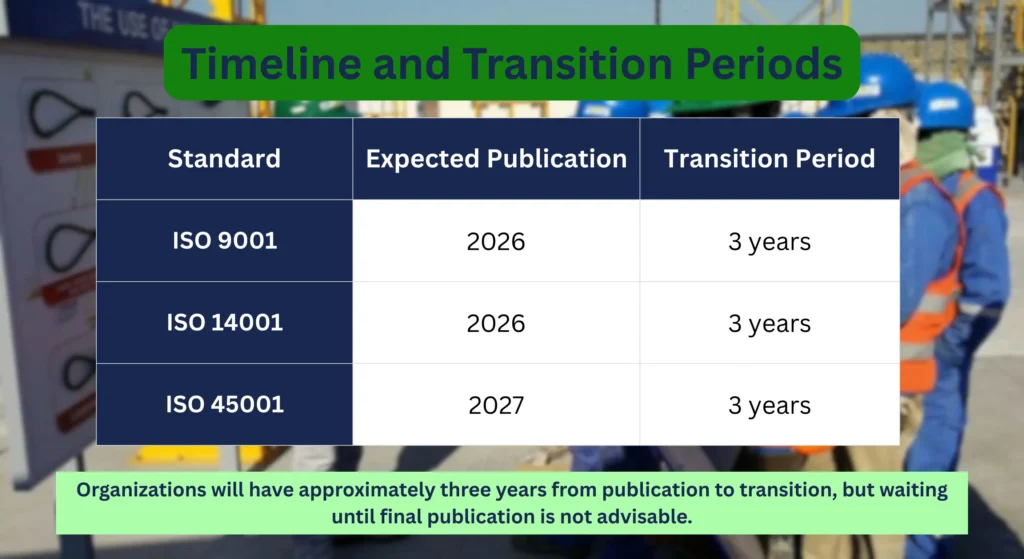
ISO has already issued formal guidance in 2023 requiring organizations to consider climate change within the context of their management systems, which was an early indicator of deeper changes coming in the next revisions.
ISO 9001:2026
Quality Management Meets Climate, Ethics, and Culture
What Is Changing
The upcoming revision of ISO 9001, expected around 2026, will significantly strengthen requirements related to:
- Organizational context and climate change considerations
- Leadership responsibility for quality culture
- Ethical behavior and integrity in decision-making
- Risk-based thinking beyond operational risks
- Alignment between business strategy and quality objectives
According to ISO experts and early draft discussions, quality will no longer be viewed only as process conformity, but as a strategic, culture-driven system influenced by environmental and social risks.
Key New Emphases
1. Climate Change in Organizational Context
Organizations will be expected to evaluate how climate change impacts their ability to deliver consistent quality. This includes risks such as raw material availability, logistics disruptions, energy reliability and regulatory changes.
Source
https://www.9001simplified.com/climate-change-and-iso-9001/
2. Stronger Leadership Accountability
Top management will be expected to actively foster a quality culture, not just approve policies. Leadership behavior, ethical conduct, and decision-making integrity will come under closer scrutiny.
3. Ethics and Organizational Values
Ethical behavior is expected to be more explicitly referenced, linking quality outcomes with trust, transparency, and responsible business practices.
What This Means for Organizations
- Quality objectives must align with sustainability goals
- Risk registers must include climate and external risks
- Leadership involvement will be assessed more deeply
- Culture and behavior will matter as much as documentation
ISO 14001:2026
Environmental Management Expands to Climate and Lifecycle Impact
What Is Changing
The next revision of ISO 14001, expected around 2026, will expand its focus on:
- Climate change mitigation and adaptation
- Lifecycle perspective across the value chain
- Environmental risks beyond direct operations
- Integration with circular economy principles
- Stronger performance evaluation and metrics
Draft discussions suggest that environmental management systems will need to demonstrate strategic environmental risk management, not just operational controls.
Source
https://www.qualitymag.com/articles/96511-what-to-expect-in-the-next-revision-of-iso-14001
Key New Emphases
1. Climate Risk and Opportunity Assessment
Organizations will be required to assess how climate change affects environmental aspects and impacts, including physical risks, transition risks and regulatory exposure.
2. Lifecycle Thinking Becomes Deeper
Lifecycle perspective will extend beyond internal processes to include suppliers, logistics, product use and end-of-life considerations.
3. Environmental Performance Over Paper Compliance
Greater emphasis will be placed on measurable environmental performance, not just documented procedures.
What This Means for Organizations
- Environmental aspects registers must be expanded
- Supplier environmental risks need evaluation
- Circular economy and waste reduction gain importance
- Environmental KPIs will face stronger audit scrutiny
ISO 45001:2027
Occupational Health and Safety in a Changing Risk Landscape
What Is Coming
While ISO 45001 is still in development and expected closer to 2027, early indications suggest focus areas such as:
- Psychosocial risks and mental health
- Climate-related health and safety risks
- Worker well-being and fatigue management
- Stronger worker participation mechanisms
- Integration with social sustainability and ethics
This aligns with global recognition that worker safety is affected not only by physical hazards but also by environmental stress, workload, and organizational culture.
Why Organizations Should Prepare Now
1. Climate Change Is Already an Audit Topic
Certification bodies have already started asking organizations how climate change affects their management systems, even before formal revisions.
2. Buyers Expect Early Alignment
Global buyers increasingly expect suppliers to demonstrate proactive sustainability integration, not reactive compliance.
3. System Changes Take Time
Embedding climate risk, culture, and ethics into QMS and EMS requires leadership engagement, training, and system redesign.
4. Integrated Systems Will Perform Better
Organizations with integrated ISO 9001, 14001, 45001, and sustainability frameworks will transition more smoothly.
Practical Preparation Roadmap
Step 1
Conduct a climate and sustainability gap assessment across QMS and EMS.
Step 2
Update risk registers to include climate, regulatory, and supply chain risks.
Step 3
Review leadership roles, ethical policies, and quality culture indicators.
Step 4
Strengthen lifecycle assessment and supplier evaluation processes.
Step 5
Train top management and internal auditors on upcoming expectations.
Step 6
Align ISO systems with sustainability frameworks such as EcoVadis, SEDEX, and ESG disclosures.
Strategic Opportunity, Not Just Compliance
Organizations that treat the 2026–27 ISO revisions as an opportunity will gain:
- Stronger resilience to climate and regulatory risks
- Better alignment with global sustainability expectations
- Improved buyer and stakeholder confidence
- More robust and future-ready management systems
Those who delay may face rushed transitions, audit non-conformities, and higher implementation costs.

Conclusion
The upcoming revisions to ISO 9001, ISO 14001, and ISO 45001 represent a decisive shift toward sustainability-integrated management systems. Climate change, ethical leadership, risk-based thinking, and lifecycle impacts will become central to certification success.
Organizations that begin preparing now will not only ensure smooth certification transitions but also strengthen long-term resilience, credibility, and competitiveness.
Emaza Services Pvt. Ltd. supports organizations with early readiness assessments, system upgrades, leadership training, and integrated ISO and sustainability consulting to help clients stay ahead of regulatory and certification changes.