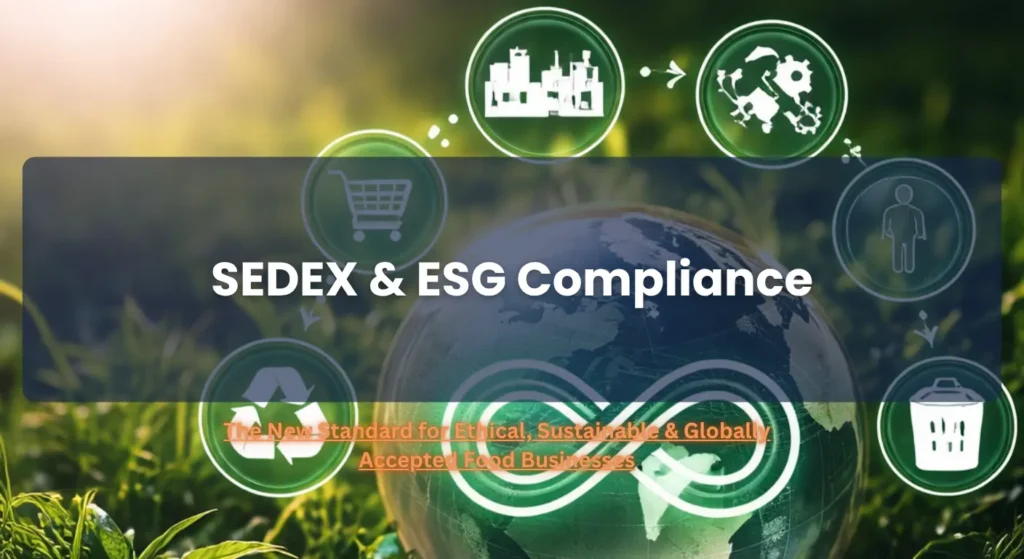
The New Standard for Ethical, Sustainable & Globally Accepted Businesses
Introduction
The global business landscape is rapidly evolving. Compliance today extends far beyond food safety certifications—organizations are now expected to demonstrate ethical integrity, environmental responsibility, and strong governance practices.
International buyers, retailers, and investors increasingly evaluate suppliers based on SEDEX compliance and ESG performance before onboarding them.
Frameworks such as SEDEX (Supplier Ethical Data Exchange) and ESG (Environmental, Social, Governance) have become essential for businesses targeting global markets, including the United Kingdom, European Union, and United Arab Emirates.
This article outlines how SEDEX and ESG complement each other and why they are critical for building future-ready, globally accepted businesses.
Understanding SEDEX
SEDEX (Supplier Ethical Data Exchange) is a globally recognized platform that enables organizations to:
- Share ethical and supply chain data
- Demonstrate compliance with labor, safety, and ethical standards
- Enhance transparency across operations
SMETA Audit (Sedex Members Ethical Trade Audit)
SMETA is the most widely accepted audit methodology under SEDEX. It evaluates compliance across four key pillars:
1. Labor Standards
- Working hours
- Wages and benefits
- Prevention of child labour
- Elimination of forced labour
2. Health & Safety
- Workplace safety conditions
- Fire safety and emergency preparedness
- Hygiene and sanitation
3. Environment
- Waste management
- Pollution control
- Resource efficiency
4. Business Ethics
- Anti-corruption practices
- Fair business conduct
Types of SMETA Audits
- 2-Pillar Audit: Labor Standards, Health & Safety
- 4-Pillar Audit: Labor, Health & Safety, Environment, Business Ethics
Most global buyers now prefer 4-Pillar SMETA audits.
What is ESG?
ESG (Environmental, Social, Governance) is a framework used by investors and global buyers to assess a company’s sustainability, ethical impact, and long-term risk profile.
Environmental (E)
- Energy consumption
- Waste management
- Carbon footprint
Social (S)
- Employee welfare
- Human rights
- Workplace safety
Governance (G)
- Ethical business practices
- Transparency
- Compliance systems
Why SEDEX + ESG is Becoming a Global Requirement
1. Changing Buyer Expectations
Global retailers and brands now require suppliers to demonstrate:
- Ethical compliance (SEDEX)
- Sustainability performance (ESG)
Why SEDEX + ESG is a Trending Requirement
1. Buyer Expectations Are Changing
Global retailers now require suppliers to demonstrate both:
- Ethical compliance (SEDEX)
- Sustainability performance (ESG)
2. Supply Chain Transparency
Organizations are expected to provide visibility into:
- Labor practices
- Environmental impact
- Ethical sourcing
3. Competitive Advantage
Businesses with strong SEDEX + ESG compliance:
- Secure more contracts
- Enter premium global markets
- Build strong brand credibility
4. Risk Management
Helps identify and mitigate risks related to:
- Labor violations
- Environmental non-compliance
- Corruption and unethical practices
How SEDEX Supports ESG Implementation
SEDEX acts as a practical implementation tool for ESG goals, particularly in:
- Social compliance (labor & workplace conditions)
- Governance (ethical practices & transparency)
- Environmental monitoring (via 4-pillar audits)
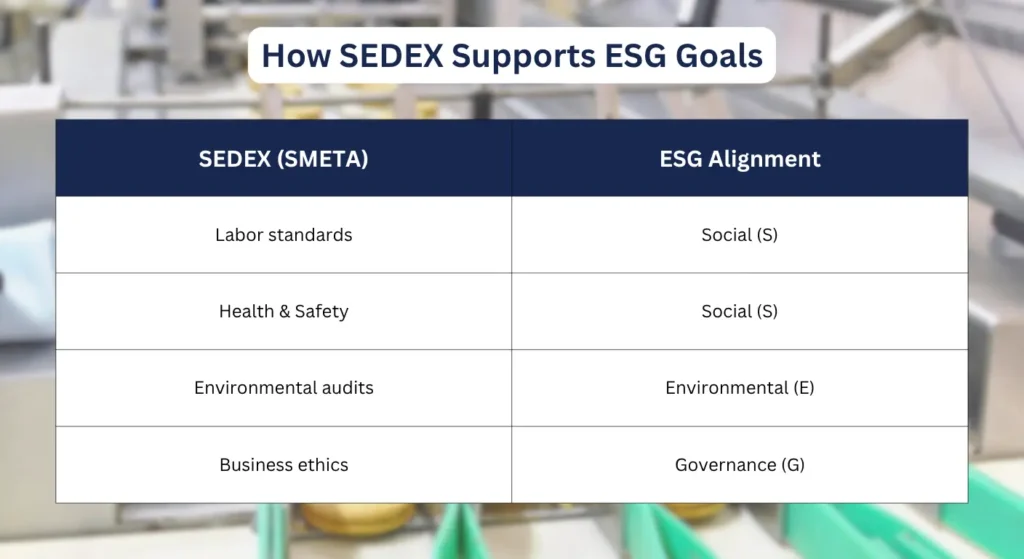
SEDEX acts as a practical implementation tool for ESG compliance.
Key Compliance Areas for SEDEX + ESG
1. Labor & Social Responsibility
- Fair wages and working hours
- Elimination of child and forced labor
- Safe and healthy working conditions
2. Health & Safety
- Fire safety systems
- Risk assessments
- Hygiene and sanitation
3. Environmental Management
- Waste reduction
- Water conservation
- Energy efficiency
4. Ethical Governance
- Anti-bribery and anti-corruption policies
- Transparent business practices
- Supplier code of conduct
Common Challenges Faced by Businesses
- Limited awareness of SEDEX and ESG requirements
- Inadequate documentation and policy frameworks
- Weak environmental monitoring systems
- Gaps in ethical implementation
- Difficulty integrating multiple standards
How Consultants Help in SEDEX + ESG Implementation
Expert consultancy plays a critical role in ensuring smooth and effective implementation.
1. Gap Assessment & Strategy
- Evaluation of current compliance status
- Identification of SEDEX & ESG gaps
- Development of implementation roadmap
2. System Development
- Ethical policies and procedures
- ESG framework and reporting systems
- SEDEX documentation
3. Implementation Support
- Workplace improvements
- Environmental monitoring systems
- Governance structure development
4. Training & Awareness
- Employee training on ethics and safety
- ESG awareness programs
- Management-level training
5. Audit Preparation
- SMETA mock audits
- CAPA (Corrective Action) support
- End-to-end audit readiness
Integration with Food Safety Standards
SSEDEX and ESG can be effectively integrated with:
- HACCP
- ISO 22000
- BRCGS Food Safety
- FSSC 22000 Version 6
This ensures a holistic compliance ecosystem covering:
Safety + Ethics + Sustainability.
Business Benefits of SEDEX + ESG
Operational Benefits
- Improved workplace safety
- Better resource utilization
- Reduced operational risks
Market Benefits
- Access to global buyers
- Increased export opportunities
- Enhanced brand reputation
Financial Benefits
- Reduced compliance penalties
- Improved investor confidence
- Long-term cost optimization
Future Trends
- Mandatory ESG disclosures in global markets
- Increased focus on ethical sourcing
- ESG integration into certification audits
- Digital tracking of sustainability metrics
Businesses adopting SEDEX + ESG early gain a significant competitive advantage.
Conclusion
SEDEX and ESG are no longer optional—they are essential pillars of modern business compliance. While SEDEX ensures structured ethical trade practices, ESG provides a broader framework for sustainability and governance. Together, they enable organizations to build transparent, responsible, and globally trusted operations.
How Emaza Services Pvt. Ltd. Can Help
Emaza Services Pvt. Ltd. offers end-to-end solutions for:
- SEDEX registration & implementation
- SMETA audit preparation (2-pillar & 4-pillar)
- ESG framework development & reporting
- Ethical compliance & documentation
- Integration with HACCP, ISO 22000 & GFSI standards
- Audit readiness and CAPA closure
Partner with Emaza Services Pvt. Ltd. to build a compliant, ethical, and future-ready business.